
Affiliate Disclosure
Cat & Whisker participates in the Amazon Associates Program. We may earn a commission on qualifying purchases — at no extra cost to you. We only recommend products we’d genuinely put in front of our own cats. Read our full disclosure policy.
If you value time, cleanliness, and a calm home environment, a high-quality self-cleaning litter box can be one of the best investments you make for you and your cat. This category has developed considerably. Today’s best automatic litter boxes are quiet, reliable, and smart enough to send you health alerts from far places. But with many models at wildly different price points, knowing what actually matters is what separates a great purchase from an expensive mistake.
This guide covers how these litter box systems work, which features are worth paying for, honest answers to the questions cat owners ask most, and our curated picks across various price points. Written for people who want the best for their feline friend, not just the cheapest option on the shelf.
What Is a Self-Cleaning Litter Box?
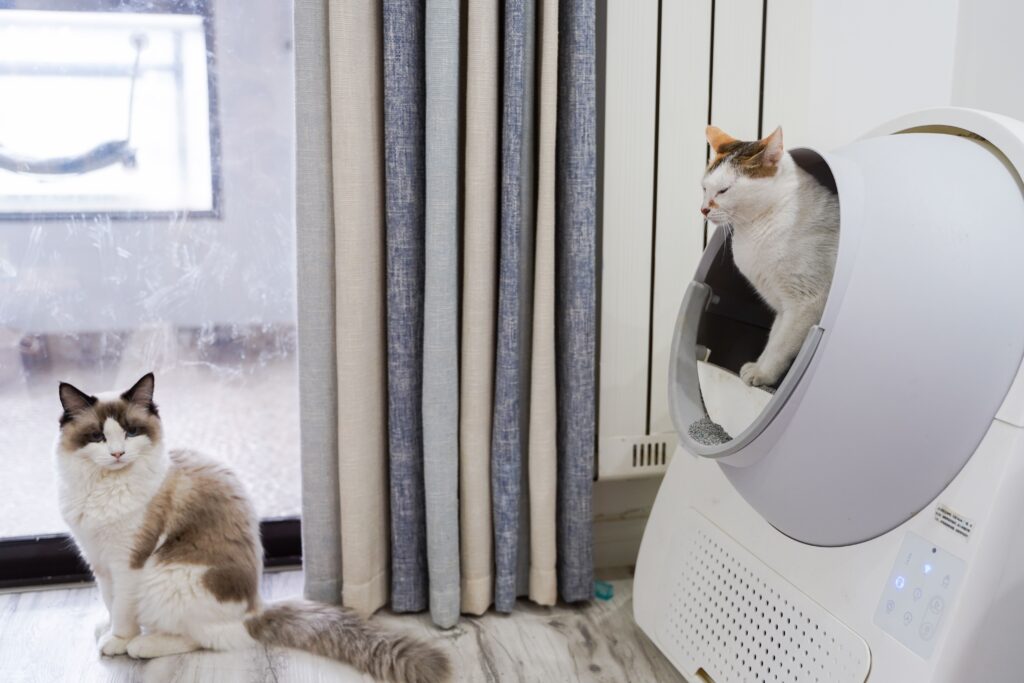
A self-cleaning litter box is an automated device that removes waste from the litter area without requiring daily manual scooping. After your cat exits and a preset delay passes, the unit runs a cleaning cycle — raking, rotating, or flushing waste into a sealed compartment where odor is contained until you empty it.
The best models do this quietly, reliably, and with enough intelligence to know when your cat is still inside. The result is a consistently clean litter area, better odor control, and significantly less time spent on one of the least enjoyable parts of being your cat’s guardian.
How Self-Cleaning Litter Boxes Work
The mechanism varies by design, but most automatic litter boxes follow the same basic sequence: detect that the cat has exited, wait for a delay (allowing clumps to firm up), run a cleaning cycle, and deposit waste into a sealed compartment.
Raking systems use a motorized rake that sweeps through the litter after a cat exits, pushing clumps into a covered waste drawer. These are the most common designs, usually quiet, and they work well with standard clumping litter. The main potential downside is jamming if the litter is overfilled or if the clumps are too soft.
Rotating globe systems — the design used by the Litter-Robot lineup — rotate an enclosed globe so waste falls through a sifting screen and drops into a drawer below. Clean litter stays in the globe for the next use. This approach handles multi-cat homes especially well and is thorough without being noisy.
Waste-flushing systems like the CatGenie use washable granules instead of traditional litter. Solid waste is liquefied and flushed away; the granules are then washed and dried automatically. No waste drawer to empty, no litter to buy — but a water hookup is required.
Gravity and manual-assist designs like the Omega Paw Roll’N Clean require a manual roll to sift waste into a collection tray. Not fully automatic, but they eliminate daily scooping without any electricity, sensors, or proprietary supplies.
All quality automatic self-cleaning models include safety sensors — pressure pads, infrared motion detectors, or weight sensors — to prevent the cleaning cycle from running while a cat is inside. Adjustable cycle delays are standard on premium models, letting you dial in timing based on your cat’s habits.
Is It Worth Getting a Self-Cleaning Litter Box?
For most cat parents, yes. But there are some things to consider.
The core benefits are genuine: waste is removed more frequently than most people manage manually, which leads to better odor control, a cleaner litter area, and less daily effort for the cat’s human. For busy households, multi-cat homes, or anyone who travels regularly, the convenience is clear.
The honest caveats: these units still require maintenance. Waste drawers will need to be emptied, filters will need to be replaced, and the units will need periodic deep cleaning. They’re also more expensive upfront than a traditional litter box, and some cats — particularly anxious ones or those sensitive to noise or very silly ones — take time to accept a new automated box.
For most homes with adult cats, the transition is smooth and the long-term value is high. For a single nervous cat or a kitten, a more gradual introduction is prudent.
Do Vets Recommend Self-Cleaning Litter Boxes?
Generally, yes — with a few conditions. Feline veterinary guidance recommends removing waste at least once daily, and a consistently clean box may help reduce litter-box aversion, one of the contributing factors behind house-soiling. A self-cleaning box can make that daily-removal standard easier to achieve, though it doesn’t replace adequate box number, placement, or veterinary evaluation if a cat begins house-soiling (AAFP/catvets.com).
The main concern vets raise is health monitoring. Daily litter-box maintenance also gives owners a chance to notice changes in stool or urination that warrant veterinary attention — frequency, consistency, or any change that might point to a urinary tract issue, digestive problem, or other health concern (VCA Hospitals). Automatic boxes remove some of that daily visual check, unless you actively check the waste drawer or use a model with usage tracking.
The solution is to choose a model with an app that logs each use, and to periodically check the waste drawer rather than simply emptying it without looking. Smart models like the Litter-Robot 4 keep a log of litter box visit frequency and weight trends, which can help you flag a pattern worth discussing with your vet (Whisker). It’s monitoring, not diagnosis, so an unusual reading is a valid reason to call your vet, not a reason to wait and watch.
What Are the Disadvantages of an Automatic Litter Box?
There are some real downsides. Let’s take a look.
Upfront cost. Premium models run $500–$700 or more. Even mid-range smart options are $200–$400. This is a rather significant investment compared to a $30 traditional box.
Ongoing expenses. Replacement filters, waste drawer liners, and in some cases proprietary litter add up over time. Factor these into your total cost calculation before buying.
Mechanical complexity. More moving parts means more potential for things to go wrong. Rakes can jam. Sensors can misfire. Motors can wear out. Quality brands back their products with solid warranties, but you’ll be relying on a piece of hardware that needs occasional troubleshooting.
Cat acceptance. Some cats, particularly timid or noise-sensitive, reject automatic boxes — especially if the unit makes unexpected sounds or vibrations during a cycle. A slow introduction will usually, but not always, solve this.
Reduced waste visibility. As noted above, the daily scoop is also a daily health check. You lose some of that passive monitoring unless you compensate deliberately.
None of these are deal-breakers for most households, but they’re worth weighing honestly before you spend several hundred dollars.
Key Features to Evaluate
Odor Control
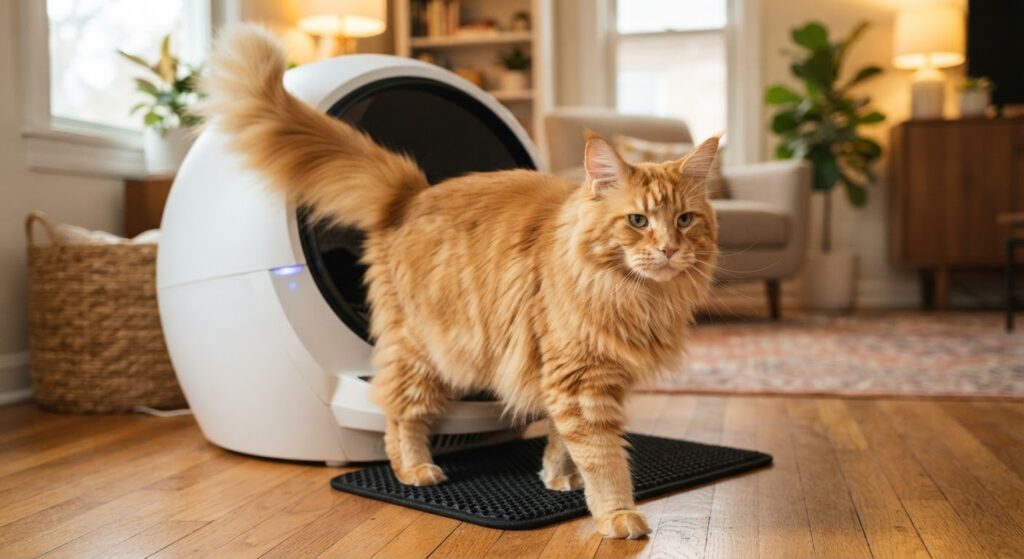
One of the most important factors for most buyers. Look for a sealed waste drawer. Also, carbon filters and an enclosed design that limits litter box odors from reaching the air. Waste that is promptly removed after each use makes a noticeable difference. Models with antimicrobial liners or odor-absorbing cartridges would add another layer of protection.
Waste Drawer Capacity and Maintenance Interval
Larger capacity means less frequent emptying, which is important for multi-cat households. Check manufacturer estimates for how many days the drawer handles between changes with your number of cats. Realistic figures for two cats are typically 7–10 days on premium models with large drawers.
Safety Sensors and Anti-Pinch Features
Sensor reliability determines whether the cleaning cycle activates at the right time. Poor sensors can trigger cycles while a cat is still inside, which is frightening and potentially dangerous. Look for explicit mention of anti-pinch technology and multi-point detection. Quality models use redundant sensing to be certain the box is empty before cycling.
Noise Level
Motors vary considerably. If your cat startles easily, or if the unit will be near a bedroom or living area, consider quiet motors and soft-start mechanisms. Rotating globe systems like the Litter-Robot tend to be quieter than aggressive raking designs. Read user reviews specifically mentioning noise — manufacturer specs might be overly optimistic.
Litter Compatibility
Some boxes require proprietary crystal litter or non-clumping materials. Others work with standard clumping clay. Crystal litter is strictly absorbent and tends to control litter dust and odor very well but it will cost more. Clumping clay is widely available and less expensive. Confirm compatibility before committing to a model — some units void warranties if used with incompatible litter types.
App Connectivity and Health Monitoring
Smart litter boxes connect to an app that tracks usage frequency, sends notifications when the drawer is full, and in some cases monitors weight, which could be a useful early indicator of urinary tract issues or other health changes. Usage tracking is becoming standard on mid-range and premium models. If you travel or want passive health data for your cat, this feature is worth having.
Cat Comfort and Accessibility
For big cats and senior cats, the entry size is a consideration. Low-entry thresholds, roomy interiors, and gentle cleaning cycles are important for older or mobility-limited cats. Adjustable cycle delays let you customize timing based on your cat’s habits. Enclosed globe designs offer privacy that many cats prefer.
Long-Term Costs
Factor in ongoing consumables over a two-year period alongside the purchase price. A mid-range model with expensive proprietary supplies can easily cost more in total than a premium model with standard accessories. Check availability of replacement parts and whether the brand has a track record of supporting their products long-term.
Do Self-Cleaning Litter Boxes Require Special Litter?
It depends on the model. Most automatic litter boxes are designed for clumping clay litter, which forms firm clumps that rake and sifting mechanisms can handle cleanly. Some models — particularly the PetSafe ScoopFree — use proprietary silica crystal trays that are not interchangeable with standard litter.
The CatGenie uses washable plastic granules exclusively and cannot use any conventional litter. The Litter-Robot 4 works with most clumping clay litters and some alternatives, but very dusty, loose-clumping, or non-clumping litters can cause performance issues.
Always check the manufacturer’s litter recommendations before purchasing, and confirm that your preferred litter type is compatible. Switching to a new litter type at the same time as introducing a new box can also confuse cats during the transition.
Will My Cat Actually Use a Self-Cleaning Litter Box?
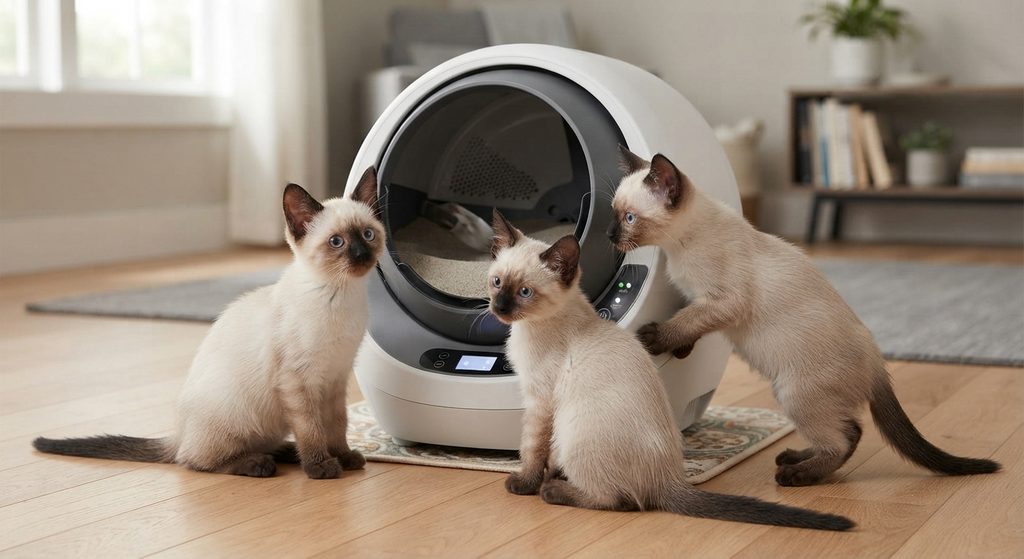
Most cats do, with a proper introduction. The key is patience and a gradual approach.
Start by placing the new box next to the existing one with the automatic cleaning function disabled. Let your cat investigate at their own pace — smell it, step in it, use it. Once they’re using it consistently, enable the cleaning cycle with the longest available delay and monitor their reaction to the sound and movement.
If your cat is startled or avoids the box after cycles begin, extend the delay and consider running a cycle while your cat is in another room so they don’t associate the noise with the box directly. Most cats adapt within a week or two.
For multi-cat homes, provide at least one additional traditional litter box during the transition to reduce competition and stress.
Cats that are very anxious, have had negative experiences with mechanical devices, or are very elderly may take longer or ultimately prefer a traditional box. If your cat genuinely refuses after several weeks of patient introduction, a good old fashioned litter box setup is still a fine choice.
Can Multiple Cats Use a Self-Cleaning Litter Box?
Yes — many models are specifically designed and rated for multi-cat households. The key considerations are waste drawer capacity, cycle durability, and cleaning frequency.
For two cats, most premium models handle the load comfortably, emptying the drawer weekly. For three or more cats, look for models with the largest available waste drawers and consider two units rather than one. See our full breakdown of Best Self-Cleaning Litter Box Picks for Multi-Cat Homes for a direct comparison of the top options.
Picks by Situation
This category splits into two kinds of “best”: models we recommend outright because nothing else in the category that does what they do; and models whose ranking depends on your specific situation — multi-cat home, busy schedule, hiding the box in furniture. For the latter, we’ve done dedicated head-to-head comparisons; this section gets you to the right one fast.
Best Overall Starting Point: Litter-Robot 4

- SELF-CLEANING LITTER BOX: Never scoop again with Litter-Robot 4 – the automatic, self-cleaning cat litter box. The paten…
- MONITOR + CONTROL VIA APP: Control the smart litter box straight from the Whisker app. Monitor waste and litter levels i…
- REDUCES LITTER BOX ODORS: The automatic clean cycle and odor-absorbing carbon filters or optional OdorTrap Packs signifi…
The Litter-Robot 4 is the reference point for the automatic litter box category. Its rotating globe design quietly separates waste from clean litter and deposits it into a large sealed waste drawer, and it comes with an app that logs usage, tracks weight, and sends notifications for a full drawer or unusual patterns.
Odor control is excellent when paired with the carbon-filter liner system. For two cats, expect to empty the drawer about weekly, though Whisker notes some households stretch closer to eight days depending on litter and usage (Litter-Robot). Whisker’s current catalog also includes the Litter-Robot 5, Litter-Robot 5 Pro, and Litter-Robot EVO; the LR4 remains the flagship recommendation for most homes on performance, reliability, and value within the premium tier, backed by Whisker’s 90-day in-home trial (subject to current return terms).
If you’re deciding between the LR4 and its closest competitors for a specific situation, see the comparisons below rather than buying on this overview alone.
Have multiple cats? Waste drawer capacity, sensor reliability, and cleaning frequency matter more with two or more cats sharing a box. We compare the Litter-Robot 4 and 5 Pro, PETKIT PuraMax 2, and ScoopFree Crystal Classic head-to-head for multi-cat homes in Best Self-Cleaning Litter Box Picks for Multi-Cat Homes.
Short on time or often away from home? If hands-off reliability and remote monitoring matter more than anything else, our Best Automatic Litter Boxes for Busy Professionals guide ranks the Litter-Robot 4, PETKIT PuraMax 2, and ScoopFree Crystal Classic specifically on that criterion, with the LR4 noted as a value alternative.
Want the box hidden, not just automated? An automatic litter box doesn’t have to look like one. Our Best Cat Litter Box Furniture and Enclosures guide covers concealment options built around self-cleaning units.
Best for No Waste Handling: CatGenie
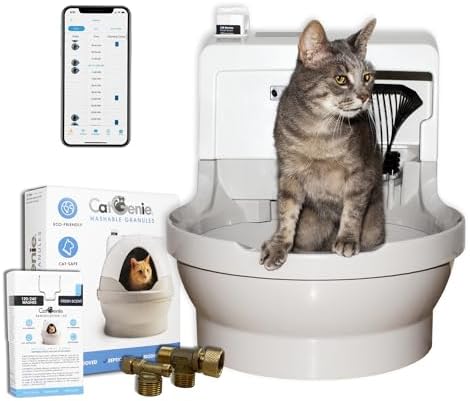
- 𝗙𝗨𝗟𝗟𝗬 𝗔𝗨𝗧𝗢𝗠𝗔𝗧𝗜𝗖 𝗦𝗘𝗟𝗙-𝗖𝗟𝗘𝗔𝗡𝗜𝗡𝗚 𝗟𝗜𝗧𝗧𝗘𝗥 𝗕𝗢𝗫 𝗪𝗜𝗧𝗛 𝗡𝗢 𝗦𝗖𝗢𝗢𝗣𝗜𝗡𝗚 – Automatically scoops waste, flushes it away, washes the gran…
- 𝗥𝗘𝗨𝗦𝗔𝗕𝗟𝗘 𝗪𝗔𝗦𝗛𝗔𝗕𝗟𝗘 𝗚𝗥𝗔𝗡𝗨𝗟𝗘 𝗦𝗬𝗦𝗧𝗘𝗠 (𝗡𝗢 𝗟𝗜𝗧𝗧𝗘𝗥 𝗧𝗢 𝗥𝗘𝗣𝗟𝗔𝗖𝗘) – Uses reusable Washable Granules instead of gross disposable li…
- 𝗙𝗨𝗟𝗟𝗬 𝗦𝗘𝗟𝗙 𝗪𝗔𝗦𝗛𝗜𝗡𝗚, 𝗙𝗟𝗨𝗦𝗛𝗜𝗡𝗚 𝗔𝗡𝗗 𝗗𝗥𝗬𝗜𝗡𝗚 𝗦𝗬𝗦𝗧𝗘𝗠 – After each cycle, waste is liquefied and flushed, while the bowl and gr…
The CatGenie takes a fundamentally different approach. It uses washable granules instead of litter — after each use, the unit liquefies solid waste and flushes it away, then washes and dries the granules in place. The result is a self-maintaining system with no waste drawer to empty and no litter to buy.
The tradeoff is setup: the CatGenie A.I. uses reusable Washable Granules and requires connection to cold water and a drain, which means a laundry room or bathroom installation, with SaniSolution cartridges keeping the cleaning cycle sanitary (CatGenie). Note that CatGenie’s newer Whoosh model instead uses disposable, plumbing-safe litter rather than washable granules. It’s worth checking which version a listing refers to before buying. For households where the idea of never handling cat waste is worth a more involved setup, this is a compelling and unique option.
Best for: owners who want zero waste handling, households with a suitable water hookup.
Best Budget Option: Omega Paw Roll’N Clean
The Omega Paw Roll’N Clean requires a manual roll to sift waste into a collection tray — about ten seconds of effort that completely eliminates the need to scoop. No electricity or sensors required, and it’s designed for clumping litter rather than a proprietary supply (Omega Paw).

- Elite Self cleaning EL-RA20-1
- Features chrome accents
- Built in “litter step” catches litter as cat exits
For a vacation home, a secondary box, or a budget-conscious household that wants to reduce daily scooping without committing to a powered system, the Omega Paw earns its place.
Best for: secondary litter boxes, budget households, travel and vacation homes.
Maintenance and Long-Term Costs
Automatic litter boxes reduce daily scooping but still require regular upkeep. Think about a budget for replacement carbon filters, waste drawer liners, and any other relevant need. Most units benefit from a monthly wipe-down of interior surfaces and an annual deep clean — disassemble removable parts, wash with mild soap and water, dry thoroughly before reassembly.
When evaluating total ownership cost, include consumables over a two-year period alongside the purchase price. The Litter-Robot’s filters and liners are readily available and reasonably priced. CatGenie’s SaniSolution cartridges are a recurring cost but eliminate litter purchases entirely. PetKit accessories are available through their website and major retailers.
Frequently Asked Questions
Are there self-cleaning litter boxes that actually work?
Yes. The premium models from Litter-Robot, PetKit, and PetSafe have strong track records with real-world users over years of use. The key is matching the model to your litter type and household size, and keeping up the proper maintenance of the unit. Budget models with poor sensors or weak motors are where reliability problems typically emerge.
How do self-cleaning litter boxes reduce odor?
By removing waste promptly after each use and sealing it in a covered compartment, automatic boxes dramatically reduce the time odorous waste sits in open air. Carbon filters and sealed waste drawers add further protection. The result is meaningfully better odor control than even diligent daily manual scooping.
What features should I prioritize?
For most buyers: reliable safety sensors, sealed odor control, litter compatibility with your preferred litter type, and waste drawer capacity sized for your number of cats. App connectivity and health monitoring are valuable bonuses, especially for travelers or health-conscious owners. Anti-pinch safety features and a solid warranty should be non-negotiable.
Do vets recommend them?
Most of them do, yes, with the proviso that cat parents should check the drawer regularly or choose a model with usage tracking. If you consistently keep the unit clean this encourages consistent litter box use, and most veterinarians view this as a positive aspect for cat’s health.
Can kittens use them?
Kittens can, but they may be startled by movement and sound, and manufacturer requirements vary by model rather than following one universal age rule. The Litter-Robot 4, for example, bases automatic operation on a minimum weight of 3 lb rather than an age cutoff, while PetKit specifies its PuraMax 2 for cats older than 6 months (Litter-Robot). Check your specific model’s manual, supervise introductions carefully, and keep the cleaning cycle disabled until your kitten meets that threshold.
Quick Buying Checklist
Before purchasing, confirm:
- Is it compatible with your preferred litter type?
- How many days between emptying the waste drawer for your number of cats?
- Are replacement filters and liners readily available and reasonably priced?
- Does the entry size and interior space suit your cat’s size and mobility?
- Does it offer app connectivity or health monitoring if you want those features?
- Is there a trial period or warranty with reliable customer support?
Final Thoughts
The best self-cleaning litter box is the one that matches your cat’s habits, the size of your home, and your tolerance for ongoing maintenance. For most cat parents who want a genuinely hands-free experience, the Litter-Robot 4 remains the benchmark — reliable, thorough, and backed by strong long-term support. For those who want zero waste handling, the CatGenie is in a category of its own. The PetKit Pura Max 2 delivers excellent smart features at a lower price point, while the PetSafe ScoopFree leads on odor control with minimal complexity. For simplicity without sacrifice, the Omega Paw earns its keep.
For most buyers, though, the real decision isn’t the category overview above. It’s which model is most appropriate for your specific situation. If that’s a multi-cat home, a packed schedule, or wanting the box out of sight entirely, the comparison guides linked in this article will get you there faster than a general list will. Whatever you choose, the upgrade from a traditional litter box tends to be one most cat owners say they wish they’d made sooner — for themselves and their cats, too.