
Affiliate Disclosure
This article may contain affiliate links. If you purchase through one, Cat & Whisker may earn a commission at no extra cost to you. See our full Affiliate Disclosure for details.
For most cats with food sensitivities, the right limited ingredient formula comes down to matching the protein source to the sensitivity — not the ingredient count on the label. Instinct’s Limited Ingredient Diet (Rabbit) is the top pick for cats needing the strictest single-species diet, Blue Buffalo Basics (Fish & Potato) is the best widely-available option for chicken-sensitive cats, and Nulo Limited (Chicken pâté) is the pick for cats who do best on wet food.
“Limited ingredient” sounds like a promise — fewer things in the bowl, fewer things that can go wrong. However, there is no AAFCO standard behind the phrase: no regulatory body defines how few ingredients a formula needs, or how “limited” is measured. It’s a manufacturer’s own description, which is why the honest way to evaluate a limited ingredient cat food isn’t the phrase on the front of the bag, but what’s actually printed on the ingredient panel.
This guide covers what a limited ingredient diet is really built to do, how to read a label closely enough to tell a genuinely simple formula from a cleverly marketed one, and three cat foods that hold up well under that closer look.
What does “limited ingredient” actually mean on a cat food label?
It means fewer named ingredients and — usually — a single animal protein source, but the term itself isn’t standardized or regulated the way nutritional adequacy claims are. AAFCO requires ingredients to be listed in descending order by weight, but it doesn’t set a ceiling on ingredient count or define what qualifies as “limited.”
That gap between marketing language and label reality matters more here than in most pet food categories, because there are actually three different claims that get blurred together under one phrase:
Single animal species. Every named meat, meal, organ, and broth in the formula comes from one animal — chicken, or rabbit, or turkey, but not a mix.
Single animal-derived ingredient. A stricter standard. This one also counts animal oils, fish oils, broths, and flavorings — a formula can be single-species in its meat and still include, say, salmon oil, which technically introduces a second animal-derived ingredient.
“Limited ingredient” as a category. The marketing term itself, which doesn’t guarantee either of the above. A formula can be labeled “limited ingredient” and still include two or three named animal proteins if a brand is counting broadly.
If your cat is on a genuine elimination diet under veterinary guidance, that distinction isn’t academic — it’s the difference between a food that actually isolates one protein and one that only reads that way at a glance.
Who actually benefits from a limited ingredient diet?
Limited ingredient formulas are built around cats showing signs of food sensitivities or allergies — not every cat needs one, but for the right cat, it can make a real difference.
Skin issues. Itchy skin, recurring skin allergies, or a coat that isn’t as healthy as it should be are common reasons owners start looking at limited ingredient options.
Digestive upset. Chronic digestive upset, sensitive stomachs, or looser stool that doesn’t resolve with a food switch can point toward an ingredient sensitivity worth isolating.
Diagnosed conditions. Cats with inflammatory bowel disease or a vet-confirmed food allergy are often placed on a formal food trial — a structured, vet-directed process of eliminating and reintroducing ingredients to identify the actual irritant.
The role of a food trial. According to the American Animal Hospital Association, an elimination diet is part of a veterinary diagnostic workup, not simply a routine food change. A proper trial rules out other causes first, uses a carefully selected novel or hydrolyzed protein, holds strict dietary control for six to eight weeks or longer, and confirms the result with a food challenge afterward. That is why the labeling gaps above matter so much: a trial only works if you know precisely what’s in the bowl, which means talking to your veterinarian before switching foods on your own.
What should you look for in a limited ingredient cat food?
A genuinely single protein source — check the panel, not the front of the bag. Look past “chicken-free” or “single protein source” claims and read the actual ingredient list for every named animal ingredient, including oils and broths.
A simple carbohydrate source. Peas, sweet potatoes, and chickpeas are common single carbohydrate sources in limited ingredient formulas. Look for one or two, not a long list of starches.
No unnecessary additives. Artificial colors, carrageenan, and unnecessary preservatives work against the entire point of a simplified formula. A cleaner additive list matters as much as the protein count.
Grain-free isn’t automatically better. Grain-free and limited ingredients often get marketed together, but they are separate questions. Grain-free addresses a specific (and fairly rare) grain sensitivity, not food sensitivities generally. Don’t assume a cat needs both.
AAFCO complete-and-balanced statement. However simple the ingredient list, the formula still needs to meet AAFCO’s nutrient profiles for your cat’s life stage. A short ingredient list doesn’t excuse incomplete nutrition.
What about preservatives, by-products, and fillers?
None of these are automatically red flags. “Artificial preservative” isn’t a formal regulatory category — ingredients like BHA, BHT, and ethoxyquin must meet FDA safety standards regardless of how “natural” they sound. By-products (organs, for example) aren’t nutritionally inferior to named muscle meat; AAFCO defines them by anatomical source, not quality. And “filler” has no regulatory meaning at all — grains, fiber, and starches often serve real functional roles in the food.
What’s actually worth checking: whether an animal source is clearly named (useful if you’re tracking a suspected trigger), whether the food carries a complete nutritional-adequacy statement, and whether the manufacturer is transparent about quality control. Those tell you more than any single ingredient on the label.
Comparison Table for Limited Ingredient Cat Food
Instinct, Blue Buffalo, and Nulo each solve for a different limited-ingredient priority — species purity, chicken-free availability, and wet-food format. The table below lines up protein source, format, and price side by side.
| Best Limited Ingredient Cat Food | Instinct Limited Ingredient Diet | Blue Buffalo Basics | Nulo Limited+ |
|---|---|---|---|
| Price | $36.99 | $47.98 | $23.49 2.8 oz. case of 12 |
| Protein sources | Rabbit or Turkey (dry & wet) | Fish (Whitefish & Menhaden Fish Meal) | Chicken (wet pâté) |
| Protein integrity | Single named animal species | Single protein category (two named fish ingredients) | Single named animal species (with marine microalgae oil) |
| Format | Dry kibble & wet pâté | Dry kibble | Wet pâté |
| Grain-free | Yes | Yes | Yes |
| Best for | Strictest single-species diets | Chicken-sensitive cats wanting a widely available option | Cats who do best on wet food |
What are the best limited ingredient cat foods?
These three formulas take genuinely different approaches to “limited ingredient,” and the differences matter more than any of them being categorically better. Here’s how each one holds up against its own single-protein claim, and who it actually fits.
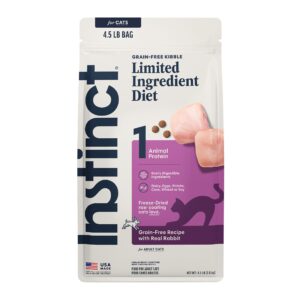
Instinct Limited Ingredient Diet — best for a genuinely single-species formula
Instinct’s Rabbit and Turkey recipes are the cleanest of the three picks here on the single-animal-species standard. The dry Turkey formula lists turkey meal, turkey, and turkey-derived ingredients as its named animal proteins, with no second species in the mix; the Rabbit recipes — both dry kibble and wet pâté — follow the same pattern. Both are grain-free and formulated to meet AAFCO’s nutrient profiles for maintenance.
The one caveat worth knowing: both dry formulas include “Natural Flavor,” which isn’t species-disclosed on the label. That’s a minor gap for most cats, but if your veterinarian has you running a strict elimination trial, it’s worth asking about before treating this as a fully closed system. Available in multiple bag sizes for dry kibble and 3- or 5.5-oz cans for wet.
$36.99 – Instinct Limited Ingredient Diet
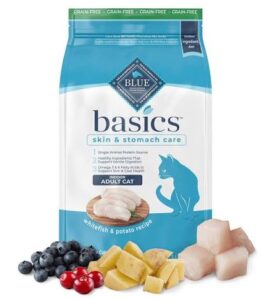
Blue Buffalo Basics Fish & Potato — best widely available pick
Blue Buffalo Basics is the easiest of the three to find, and its Fish & Potato recipe is built around a chicken-free formula for cats sensitive to poultry specifically. Worth knowing before you buy: the brand describes this as a “single animal protein source,” but its own ingredient list names both whitefish and menhaden fish meal — two named fish ingredients, not one. That’s still a single protein category (fish), and a genuinely useful option if chicken is the sensitivity you’re managing, but it’s not the strictest single-species formula on this list.
Blue Buffalo’s manufacturer page doesn’t publish a full ingredient panel or AAFCO statement in its standard product content — check current packaging for the complete ingredient list and guaranteed analysis before feeding, especially if you’re managing a diagnosed sensitivity rather than a general preference for simpler food.
$47.98 – Blue Buffalo Basics Fish & Potato
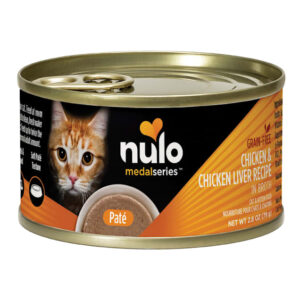
Nulo Limited+ Chicken Pâté — best wet-food pick
For cats who do best on wet food, Nulo’s Limited+ Chicken Pâté leads with chicken, chicken broth, and dried chickpeas — a clean, chicken-forward formula formulated to meet AAFCO’s nutrient profiles for all life stages. It also includes marine microalgae oil and a non-specific “Natural Flavor,” so it’s best described as a single named animal protein rather than a strictly single-animal-derived-ingredient formula. For most cats managing a general sensitivity rather than a strict veterinary elimination trial, that distinction won’t matter — it’s a genuinely simple, single-protein-forward wet option.
$23.49 – Nulo Limited+ Chicken Pâté
How do I choose the right limited ingredient cat food for my cat?
Match the formula to what you’re actually managing, not just the “limited ingredient” label.
Suspected food allergy or a vet-directed food trial: Instinct’s Rabbit or Turkey recipes are the strictest single-species options here — the better starting point if you need to isolate one protein as cleanly as possible.
Chicken sensitivity specifically, and you want something easy to find: Blue Buffalo Basics Fish & Potato covers the most common single sensitivity (chicken) in a widely stocked formula.
A cat who prefers or needs wet food: Nulo’s Limited+ Chicken Pâté is the cleanest wet option of the three, though not the strictest single-protein formula if you’re running a formal elimination trial.
FAQ
What are the most common cat food allergies?
In published veterinary case studies, beef, fish, and chicken are the most frequently reported dietary triggers in cats with confirmed food-related skin reactions, with dairy, wheat, corn, and lamb reported less often. It’s worth noting these studies are based on a relatively small number of documented cases, so they show what’s been reported, not how common each trigger is across the overall cat population.
It’s also worth knowing the difference between a true food allergy (an immune-mediated reaction) and a food intolerance (a non-immune reaction, like lactose intolerance) — the two get lumped together, but only an elimination-and-challenge diet supervised by a veterinarian can actually confirm which one a cat has. A reaction history or an ingredient list alone can’t diagnose it.
Is Grain-free cat food the same as limited ingredient cat food?
No — they are separate claims, and a food can be one without the other. “Grain-free” just means no grain ingredients; a grain-free food can still include many ingredients, including several animal proteins and starches like peas, lentils, or potatoes. “Limited ingredient” is a manufacturer’s own description with no regulated definition — a limited-ingredient food can still include a grain like rice or oats. The only way to know what’s actually in either is to read the full ingredient panel.
Is “limited ingredient” a regulated term? No. AAFCO doesn’t define or regulate “limited ingredient” the way it does nutritional adequacy claims. It’s a manufacturer descriptor — always check the actual ingredient panel rather than relying on the phrase alone.
What’s the difference between “single protein” and “limited ingredient”? “Single protein” (or single animal species) means every named meat ingredient comes from one animal. “Limited ingredient” is the broader marketing term and doesn’t guarantee that — some limited ingredient formulas include more than one named animal protein or animal-derived ingredient like fish oil.
Should I put my cat on a limited ingredient diet without a vet’s input? If you suspect a genuine food allergy or your cat has ongoing digestive upset, skin allergies, or signs of inflammatory bowel disease, talk to your veterinarian first. A proper elimination trial is a diagnostic process — six to eight weeks or longer on a carefully chosen protein, with no other foods or treats in the mix — and it’s most useful when it’s structured and monitored rather than managed alone.
Is grain-free the same as limited ingredient? No — they’re often sold together but address different things. Grain-free removes grains specifically; limited ingredient is about overall ingredient simplicity and protein count. A cat with a grain sensitivity needs grain-free; a cat with a broader food sensitivity needs a genuinely simple ingredient list, which may or may not include grain.
Can a limited ingredient diet still be nutritionally complete? Yes, as long as it carries an AAFCO complete-and-balanced statement for your cat’s life stage. A short ingredient list and complete nutrition aren’t in conflict — check for the AAFCO statement on any formula regardless of how simple the ingredient panel looks.
Is a limited ingredient cat food worth it?
For a cat with a genuine food sensitivity, allergy symptoms, or a vet-directed food trial, a well-chosen limited ingredient diet is often the single most useful dietary change you can make — it turns a guessing game about what’s causing itchy skin or digestive upset into something you can actually isolate and test. For a cat with no sensitivity symptoms at all, it’s a reasonable but not essential choice; the real value of “limited ingredient” formulas isn’t the marketing phrase, it’s the transparency of a shorter, more legible ingredient panel and the ability to actually know what your cat is eating.
Whichever formula you choose, read the ingredient list the way you would a supplement label — not for the front-of-bag promise, but for what’s actually inside.
Read our guide Best Natural and Holistic Cat Food.